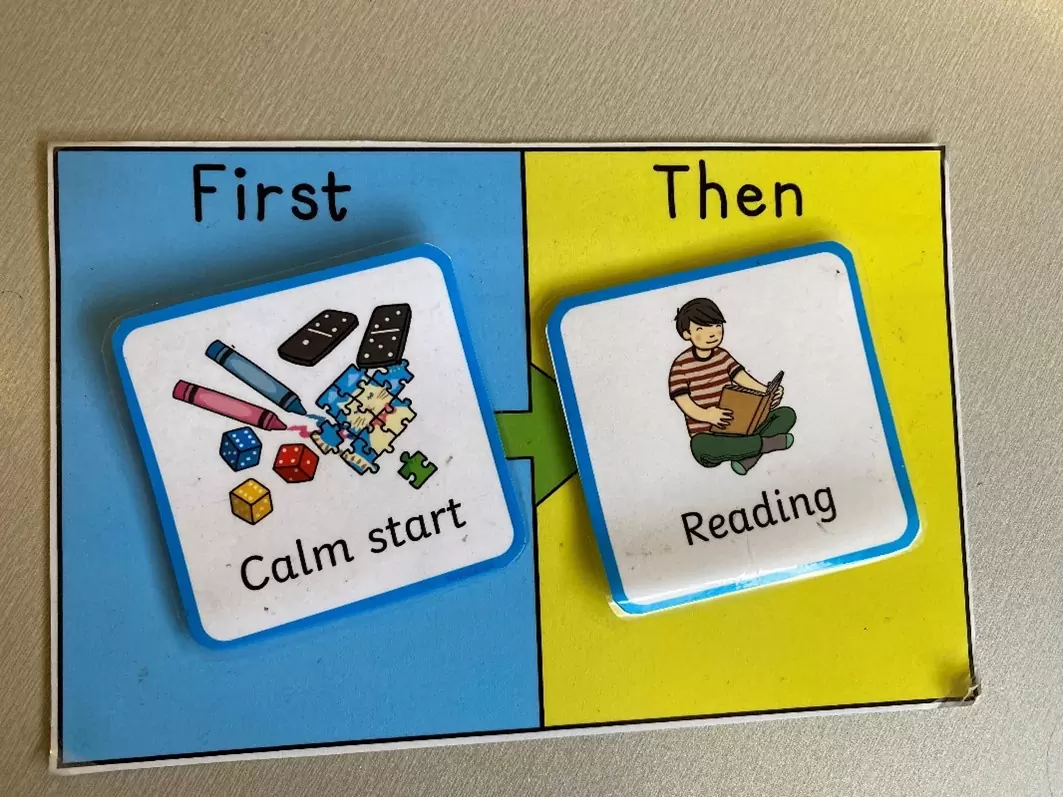
At school, we use a simple and effective strategy called “First and Then” to help guide students’ behaviour and support their understanding of routines and expectations.
The “First and Then” approach breaks tasks into manageable steps and helps children understand what needs to happen before something preferred occurs. For example, we might say, “First we clean up, then we go outside,” or “First finish your math, then you can read your favourite book.”
This strategy works well because it is clear, predictable, and reduces anxiety. It helps children feel more in control and motivated to complete less-preferred tasks, knowing that something enjoyable will follow. “First and Then” is especially helpful for young children or those who benefit from structure, or for those who can only remember a few things at a time.
You can easily use “First and Then” at home, too! Try it during routines like getting ready for bed (“First brush your teeth, then we can read a story”) or finishing meals (“First eat your veggies, then you can have dessert”) or for using technology (“First help with the dishes, then you can have technology time”)
Consistency is key, and using this language at home reinforces what your child is learning at school. Together, we can build positive habits and a sense of achievement. Want to learn more? Check out this video by Scope Australia. Want your own kit? Let the office know and we can put one together for you.